Families researching senior care quickly run into two terms that sound interchangeable but describe very different settings: assisted living and nursing homes. Choosing between them is less about which is better and more about which level of care a person actually needs. Assisted living supports daily life for people who are largely independent, while nursing homes, formally called skilled nursing facilities, provide round-the-clock medical care for people with significant health needs. This 2026 guide walks through the differences in care level, staffing, environment, typical residents, and regulation, and explains how families and clinicians usually decide between the two.
Level of care: support vs medical treatment
The core distinction is the intensity of care. Assisted living helps residents with what professionals call activities of daily living: bathing, dressing, grooming, using the toilet, moving around, and eating. Staff also typically manage or remind residents about medications, prepare meals, and handle housekeeping and laundry. Residents generally do not need continuous medical treatment; they need reliable help with everyday tasks. Many states allow assisted living communities to provide limited health services, such as medication administration by trained staff or coordination with visiting nurses, but there is a ceiling on what they can handle, and that ceiling varies by state.
Nursing homes provide that same daily-living support plus skilled medical care around the clock. That can include wound care, injections, intravenous therapy, catheter and ostomy care, ventilator support in some facilities, and rehabilitation services such as physical, occupational, and speech therapy. Many nursing home stays are short-term rehabilitation after a hospitalization, such as recovery from a stroke, surgery, or serious fall, while others are long-term placements for people whose medical needs can no longer be met elsewhere.
Staffing: who provides the care
Staffing follows the care level. In assisted living, most hands-on care comes from personal care aides and medication technicians, with licensed nurses on staff or on call depending on state rules and the community’s model; some communities have a nurse on site daily, others only during business hours. Physicians are not typically based on site.
Nursing homes are required to have licensed nursing coverage twenty-four hours a day, including registered nurses, licensed practical nurses, and certified nursing assistants, with a medical director overseeing clinical care. Federal rules set minimum staffing and training expectations, and therapy professionals are commonly on site. This clinical staffing depth is the defining operational difference between the two settings.

Setting and daily life
Assisted living communities are designed to feel residential. Residents usually live in private or shared apartments or studios, often with their own furniture, and share restaurant-style dining rooms, activity spaces, gardens, and common lounges. Days are structured around social programming, outings, fitness classes, and hobbies, with care delivered discreetly in the background. Many communities also include secured memory care neighborhoods for residents with dementia.
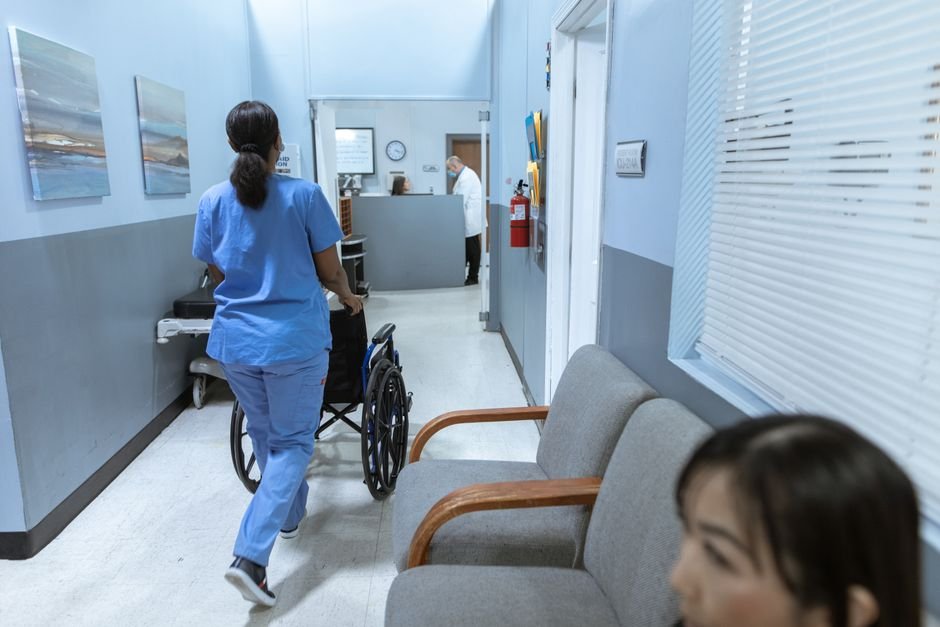
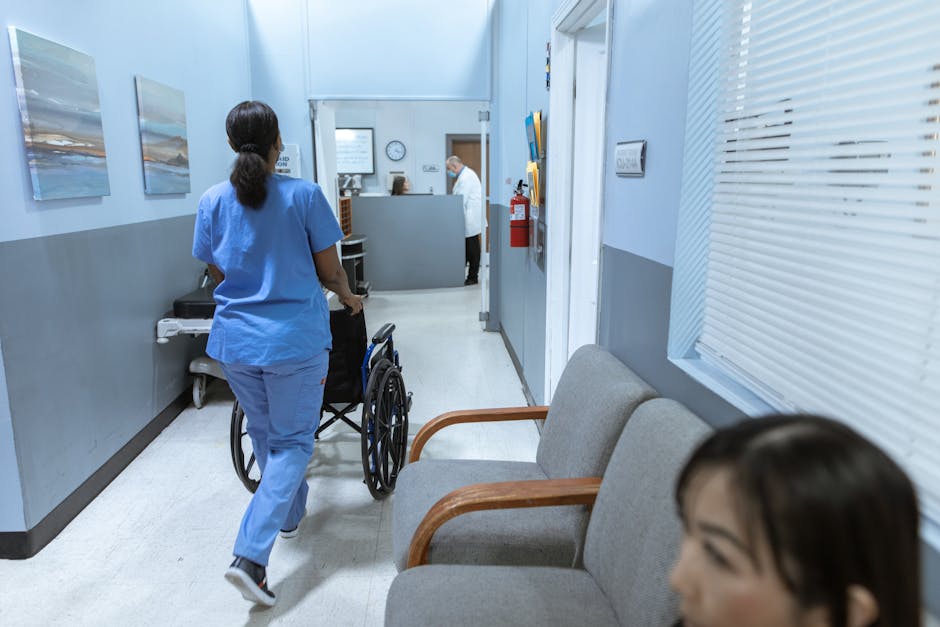
Nursing homes are organized more like healthcare settings, though many work hard to soften the atmosphere. Rooms are often shared or private with hospital-style beds, nurse stations anchor each wing, and daily schedules revolve around medical routines, therapies, and meals. Activities and social programs exist in nursing homes too, but the environment prioritizes clinical care and safety over an independent lifestyle. Some newer facilities follow household or small-house models designed to feel less institutional, with private rooms arranged around shared kitchens and living areas, though these remain a minority of the nation’s skilled nursing beds.
Who typically lives in each setting
A typical assisted living resident is an older adult who struggles to manage a household alone, perhaps because of mobility limits, early memory changes, or the loss of a spouse, but who does not need daily medical treatment. Many are in their late seventies to nineties and remain socially active for years, and for some, moving into a community actually expands their social life compared with living alone at home.
Nursing home residents generally have more serious or complex conditions: advanced dementia, significant mobility loss requiring transfer assistance, chronic illnesses needing skilled monitoring, or recovery needs after a hospital stay. It is common for a person to live in assisted living for years and later transition to skilled nursing when needs increase, which is why some campuses offer both levels in one place. Continuing care retirement communities formalize this arrangement by contract, letting residents move between independent living, assisted living, and skilled nursing on a single campus as their needs evolve.

Regulation and oversight
Regulation differs sharply. Assisted living is licensed and inspected at the state level, and rules vary widely from state to state on staffing, training, what care communities may provide, and disclosure requirements. There is no federal assisted living standard, so families should review their own state’s licensing records and inspection reports.
Nursing homes that accept Medicare or Medicaid are federally regulated in addition to state licensing. They undergo regular inspections, and their staffing levels, health inspection results, and quality measures are published on the federal Care Compare website. This makes nursing home quality data easier to research publicly than assisted living data in most states. For assisted living, the best sources are usually the state licensing agency’s inspection reports, the state long-term care ombudsman program, and direct questions to the community about complaint history and staff turnover.
Cost structure and payment differences
Without getting into specific figures, the two settings are paid for differently. Assisted living is usually private pay, through personal savings, family contributions, long-term care insurance, or, in some states, limited Medicaid waiver programs. Nursing home care is more often supported by public programs: Medicare can cover qualifying short-term skilled stays after a hospitalization, and Medicaid is the largest payer of long-term nursing home care for those who qualify financially. Costs in both settings depend on location, room type, and the level of care required, and payment rules have many conditions, so families should confirm eligibility details through official program sources rather than assumptions before counting on any coverage.
How families decide: care needs come first
The decision usually starts with an honest assessment of needs, ideally involving the person’s physician. A clinical or functional assessment can clarify whether someone needs help with daily activities, which points to assisted living, or ongoing skilled care, which points to a nursing home. Ask hospitals’ discharge planners for guidance after a hospitalization, tour both types of settings, and review state inspection records. Geriatric care managers, also called aging life care professionals, can conduct independent assessments and help families weigh options when the picture is unclear or relatives disagree. It is also worth asking any assisted living community directly what conditions would require a resident to move out, since that answer reveals where its care ceiling actually sits. The federal Eldercare Locator connects families with local aging agencies that can help evaluate options, and the government’s long-term care planning site explains care settings and payment sources in detail.
Final thoughts
Assisted living and nursing homes sit at different points on the same continuum: one supports independent daily living with help nearby, the other delivers full-time medical care. Matching the setting to the person’s actual needs, rather than to assumptions or labels, leads to better outcomes and less disruption later. In 2026, many families find the most useful step is a professional needs assessment followed by in-person tours, so the choice rests on facts rather than fear.
Disclaimer
This article is for general informational purposes only and is not medical, legal, or financial advice. Care settings, licensing rules, and payment programs vary by state and change over time. Always verify services, licensing, and costs directly with providers and consult qualified professionals when making care decisions.